


Table of Contents
- What Landlord Insurance Coverage for Texas Rentals Includes
- Landlord Liability Insurance Coverage: Your Legal Defense
- Loss of Rental Income Coverage: Protecting Your Cash Flow
- Average Cost of Landlord Insurance in Texas
- Texas-Specific Perils: Wind, Hail, and Flood Risks
- Comparing Landlord Insurance Coverage Options
- Build a Policy That Fits Your Texas Rental Portfolio
- Frequently Asked Questions
Last Updated: September 8, 2026
Owning rental property in Texas can be a solid income stream, but a single lawsuit or a damaged roof can erase years of profit. Landlord insurance coverage for Texas rentals is the financial barrier that protects your investment.
Landlord insurance coverage is a specialized policy for property owners who rent out their dwellings, distinct from standard homeowners insurance. It combines property protection for the structure with liability safeguards for the owner.
What Landlord Insurance Coverage for Texas Rentals Includes
Dwelling Coverage and Other Structures
Dwelling coverage pays to repair or rebuild the rental home if it is damaged by a covered peril, such as fire, lightning, or wind. This portion of the policy should reflect the replacement cost of the home, not its market value or the outstanding mortgage balance. Many Texas landlords insure for the purchase price, leaving them short when construction costs rise.
Separate from the main dwelling, most policies include coverage for other structures like detached garages, fences, sheds, or a standalone workshop. A common approach is to allocate around 10% of the dwelling coverage amount to these structures, though you can adjust that figure based on what is on your lot (iii.org).
What Standard Policies Exclude
Every policy has exclusions, and knowing them is as important as understanding what is covered. Flood damage is almost always excluded from standard landlord policies, a significant exposure in Texas given its history of heavy rainfall and hurricane-driven storm surge. Earthquake damage is also typically excluded.
Water damage from a burst pipe inside the home is usually covered, but gradual leaks, sewer backups, and floodwaters are not. Tenant belongings are another major gap, your policy covers the structure, not the tenant’s furniture or electronics. Renters insurance protects their possessions, and many landlords require proof of it in the lease.
Landlord Liability Insurance Coverage: Your Legal Defense
Liability protection can save you from financial ruin and is often undervalued by new investors. This coverage responds when someone is injured on your property and you are found legally responsible, covering medical payments and legal defense costs.
Landlord liability insurance coverage extends beyond the property itself. If a tenant’s dog bites a visitor on the sidewalk, or a contractor slips on an icy step, your liability portion can step in. It also covers legal defense costs in a premises liability lawsuit.
The policy limits you choose matter. A standard policy might offer $100,000 or $300,000 in liability protection, but a serious injury claim can exceed those figures. An umbrella policy sits on top of your landlord policy and provides an additional layer of protection, often starting at $1 million.
How Umbrella Policies Interact with Your Landlord Coverage
For Texas investors who own multiple rentals or have substantial personal assets, the interaction between landlord insurance and a personal umbrella policy is critical. A personal umbrella policy provides excess liability coverage above your underlying policies, including your auto and homeowners policies. Whether it extends to your landlord policies depends on how the policy is written.
Most personal umbrella policies can be endorsed to include rental properties as underlying insured locations. When done correctly, the umbrella policy provides an additional layer of protection above the liability limits on each landlord policy. For example, if your landlord policy has a $300,000 limit and your umbrella provides $1 million in excess coverage, a claim exceeding the underlying limit would trigger the umbrella layer.
However, there is a common trap. Some umbrella policies exclude coverage for rental properties unless they are specifically scheduled on the policy. If you own a rental in Texas and your umbrella policy does not list it, you may have a gap that only becomes apparent after a claim. When you purchase or renew your umbrella policy, provide your agent with a complete list of your rental properties and confirm each one is included.
The High-Net-Worth Angle for Texas Investors
Texas has no state income tax, which makes it attractive for high-net-worth individuals to build real estate portfolios. But those investors often carry significant personal assets, investment accounts, retirement savings, and equity in their primary residence, that a lawsuit could target. A landlord policy with a $300,000 liability limit is rarely sufficient to protect that wealth.
For these investors, the standard approach is to layer an umbrella policy on top of both personal and rental liability coverage. The umbrella policy typically requires underlying limits of $300,000 to $500,000 on each landlord policy, then provides an additional $1 million to $5 million in excess coverage (irmi.com).
Many Texas landlords skip the umbrella policy to save a few hundred dollars a year. One lawsuit involving a serious injury on the property can easily exceed the base liability limits of a standard policy, leaving your personal assets exposed. If you own multiple rentals or have significant personal wealth, confirm that your umbrella policy explicitly schedules each rental property.
What Umbrella Policies Do Not Cover
Umbrella policies are not a catch-all. They typically do not cover intentional acts, contractual liabilities you assume outside the lease agreement, or pollution-related claims. They also do not cover damage to the rental property itself, that is what your dwelling coverage is for.
Another limitation is that umbrella policies require you to maintain the underlying limits specified in the policy. If you reduce your landlord policy’s liability limit below the required threshold, the umbrella policy may not respond to a claim. An annual review with an agent is essential as your portfolio grows.
Loss of Rental Income Coverage: Protecting Your Cash Flow
When a fire or storm makes your rental uninhabitable, you lose more than just the structure, you lose the monthly rent that pays the mortgage. Loss of rental income coverage, sometimes called fair rental value coverage, replaces that lost cash flow while the property is repaired.
This coverage kicks in after a covered loss forces the tenant to move out. It pays the rent you would have collected, up to the policy’s stated limit and time period, usually 12 months (iii.org). Without it, you continue paying the mortgage out of pocket.
The cost of adding this coverage is generally modest relative to the protection it provides. When you receive a quote, ask the agent to show you the premium difference with and without this endorsement.
Average Cost of Landlord Insurance in Texas
Pricing for landlord insurance varies widely, and no single number applies to every property. The premium is driven by factors like the home’s location, age, construction type, and the coverage limits you select.
Because every property carries different risks, the most reliable way to understand your cost is to request a personalized quote. An independent agency can compare options across multiple carriers.
Key Factors That Drive Your Premium
Several variables influence what you will pay for a policy. The replacement cost of the home is the largest driver, as it sets the maximum the insurer might pay out. Your claims history also matters, frequent claims signal higher risk and push your premium up.
Location plays a major role in Texas. Properties near the Gulf Coast face higher windstorm and hurricane risk, which insurers price accordingly. The age and condition of the roof is another significant factor, particularly in hail-prone areas.
| Policy Feature | What It Does | Typical Impact on Premium |
|---|---|---|
| Dwelling coverage limit | Pays to rebuild the structure | Higher limits increase cost |
| Liability limit | Covers lawsuits and injuries | Raising limits adds modest cost |
| Loss of rental income | Replaces lost rent during repairs | Small added premium |
| Windstorm endorsement | Covers hurricane and wind damage | Significant cost in coastal zones |
| Flood insurance | Covers rising water damage | Separate policy, varies by zone |
Texas-Specific Perils: Wind, Hail, and Flood Risks
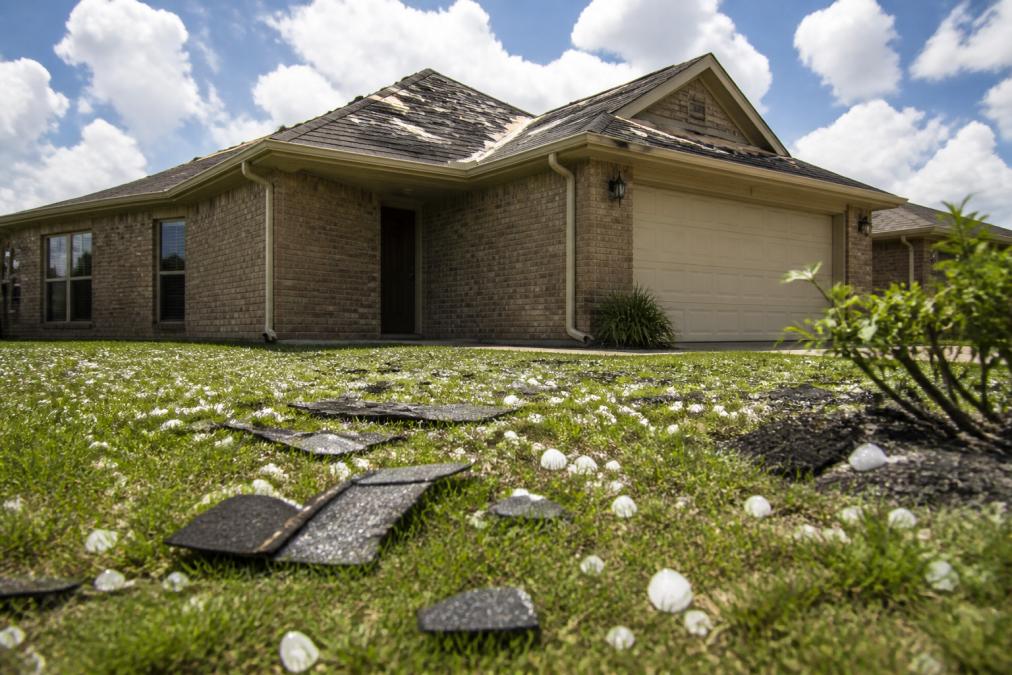
Texas weather is a force of its own, and your landlord policy needs to account for it. Hailstorms routinely damage roofs across the state, and wind events can tear shingles off or bring down trees onto structures. Standard policies typically cover these perils.
Flood risk is the most dangerous gap for Texas landlords. Standard landlord policies exclude flood damage, and the state’s flood zones extend far beyond coastal areas. Heavy rainfall from storms like Hurricane Harvey demonstrated that even inland properties can suffer catastrophic flooding. Flood insurance is available through the National Flood Insurance Program and some private carriers, but requires a separate policy.
The Texas Department of Insurance regulates how these policies are sold and provides guidance on disaster preparedness and recovery. Understanding your property’s flood zone designation is critical in deciding whether flood coverage is necessary.
For a Texas rental property, assume flood coverage is not included in your standard landlord policy. Check your property’s flood zone status and decide whether the risk justifies the additional premium before a storm is on the radar.
Comparing Landlord Insurance Coverage Options
When you shop for landlord insurance, you will encounter different types of policies. A named perils policy covers only the specific disasters listed in the contract, such as fire, lightning, and wind. An open perils policy, sometimes called “all risk,” covers everything except the exclusions explicitly stated in the policy.
Beyond the policy form, the biggest differentiator for many Texas landlords is how the insurer handles claims when you do not live near the property. A significant share of Texas rental property owners are out-of-state investors, often managing homes in Dallas-Fort Worth, Houston, or San Antonio from another state.
The Remote Claims Process: What Out-of-State Landlords Need to Know
Most national carriers and many regional Texas insurers now offer digital-first claims reporting through mobile apps or online portals. You can file a claim, upload photos of the damage, and track the adjuster’s progress without making a phone call.
However, the claims process still depends on local boots on the ground. When a hailstorm damages a roof in Round Rock, the insurer will send a local adjuster to inspect the property. As an out-of-state owner, you need a plan for who will meet the adjuster, secure the property after a loss, and oversee emergency repairs like tarping a damaged roof.
A common pattern among experienced remote landlords is to document the property thoroughly before a loss occurs. Walk-through videos, dated photos of each room, and receipts for major improvements create a baseline that speeds up the claims process.
Another consideration is how the insurer pays out claims. Some carriers issue a single check made out to both you and your mortgage lender, which requires the lender’s endorsement before you can cash it. Others offer a two-check process: one for the actual cash value of the damage upfront, and a second for the recoverable depreciation after repairs are completed.
What to Ask Before You Buy
Before you commit to a policy, ask the agent or carrier directly about the claims workflow for out-of-state owners. Specific questions include:
- Does the insurer allow claims to be filed entirely online or through a mobile app?
- Will the adjuster coordinate directly with my property manager or local contractor?
- How are claim payments issued, one check or a two-check process?
- What is the typical timeline for the initial adjuster visit after a claim is filed?
- Does the policy include emergency repair coverage that reimburses me for immediate mitigation like tarping or board-up services?
For out-of-state landlords, the claims process is not just about filing a report. It is about having a local network, a property manager, a contractor, or a trusted neighbor, who can secure the property and meet the adjuster when you cannot be there.
Working with an independent agency simplifies this comparison. At Glenn Davis Insurance, we are not tied to any single insurance company, which means we can evaluate policies from multiple carriers and match you with the one that fits your property and your risk tolerance.
Build a Policy That Fits Your Texas Rental Portfolio
The right landlord policy balances three priorities: adequate dwelling coverage, strong liability protection, and the endorsements that address Texas-specific risks. Start by calculating the true replacement cost of your property, then layer on liability coverage that protects your assets, and finally add endorsements like loss of rental income and flood coverage.
A common mistake is treating landlord insurance as a commodity to be purchased at the lowest price. A cheaper policy with lower limits or missing endorsements can cost you far more when a claim occurs.
Reviewing your policy annually is a habit that pays off. Replacement costs rise with inflation, your liability exposure may grow as your portfolio expands, and carriers adjust their underwriting criteria over time. An annual review with an agent who understands the Texas market ensures your coverage keeps pace.
Building the right landlord insurance coverage for Texas rentals is about protecting your investment from the specific threats this state presents, from hail and flooding to tenant lawsuits. At Glenn Davis Insurance, we help Texas property owners compare options across multiple carriers and secure the right protection at the best price. Get quotes started with Glenn Davis Insurance and make sure your rental portfolio is built on a solid foundation.
Frequently Asked Questions
Is landlord insurance required in Texas?
Texas law does not require landlord insurance, but your mortgage lender almost certainly does. If you financed the property, the lender will mandate a policy with dwelling coverage sufficient to protect their investment. Beyond the lender requirement, landlord insurance is a practical necessity. Without it, you personally absorb the cost of property damage, liability lawsuits, and lost rent. A standard homeowners policy will not cover a tenant-occupied property, so a dedicated landlord policy is the only way to get proper protection.
What is the average cost of landlord insurance in Texas?
The average cost of landlord insurance in Texas varies significantly based on location, property value, and coverage choices. Policies generally cost more than standard homeowners insurance because of the additional liability and rental income protections. Premiums in Texas are also influenced by the state’s exposure to hail and windstorms. To find a rate for your specific property, request quotes from an independent agency that can compare options from multiple carriers and factor in your property’s exact risk profile.
Does landlord insurance cover tenant damage in Texas?
Landlord insurance covers damage from named perils like fire, wind, or vandalism, but it does not cover normal wear and tear or intentional damage caused by your tenant. For example, a broken window from a storm is covered, but a hole punched in the drywall by a frustrated renter is not. To protect against this gap, collect a security deposit and require renters insurance. A renters policy covers the tenant’s personal belongings and their liability, reducing the chance they will file a claim against your policy for minor issues.
How much liability coverage should a Texas landlord carry?
Most Texas landlords should carry at least $300,000 to $500,000 in landlord liability insurance coverage. This protects you if someone is injured on your property and files a lawsuit. Given the cost of legal defense and medical payments, higher limits are often worth the modest premium increase. For landlords with significant assets, an umbrella policy is a smart addition. It provides extra liability protection beyond your landlord policy limits, helping shield your personal savings and other investments from a major claim.
Does landlord insurance cover loss of rental income?
Yes, loss of rental income coverage is a standard endorsement on most landlord policies. Also called fair rental value coverage, it reimburses you for lost rent if a covered peril, like a fire, makes the property uninhabitable and repairs take time. The coverage typically pays the fair market rent for the duration of the repair period or up to your policy’s time limit. You cannot claim this if the unit sits empty because you chose not to re-rent it or because of a tenant eviction.
What is the difference between actual cash value and replacement cost?
Actual cash value (ACV) pays to replace damaged property minus depreciation. A 10-year-old roof damaged by hail would be reimbursed at its depreciated value, leaving you to cover the gap. Replacement cost coverage pays to rebuild or repair with new materials of similar kind and quality, without deducting for age. For a rental property, replacement cost is the better choice. The premium is higher, but the financial protection is far stronger and helps you avoid an out-of-pocket shortfall after a major claim.