


Table of Contents
- Step 1: Shop Around and Compare Quotes From Multiple Carriers
- Step 2: Bundle Home and Auto Policies for Multi-Policy Discounts
- Step 3: Understand Homeowners Insurance Deductible vs Premium Trade-Offs
- Step 4: Claim Texas Department of Insurance Premium Discounts for Windstorm Mitigation
- Step 5: Does Standard Homeowners Insurance Cover Flood Damage? Separate Policies Explained
- Step 6: Improve Your Credit-Based Insurance Score and Claims History
- Step 7: Review Your Policy Endorsements and Coverage Limits Annually
- Frequently Asked Questions
Last Updated: September 10, 2026
Step 1: Shop Around and Compare Quotes From Multiple Carriers
Learning how to lower texas homeowners insurance starts with the one step most homeowners skip: getting quotes from more than one carrier. Texas has one of the most crowded home insurance markets in the country, and carriers price the same house very differently depending on their appetite for your roof type, claim history, and ZIP code. Texas has one of the most crowded home insurance markets in the country, and carriers price the same house very differently depending on their appetite for your roof type, claim history, and ZIP code.
A single online quote is a starting point, not a benchmark. Independent agents can run your details through multiple carriers at once, which is the practical version of “shop around” that actually saves time.
What to gather before you start comparing:
- Your current declarations page and annual premium
- Year built, roof age and material, square footage
- Prior claims in the last five years
- Any recent upgrades (new roof, updated wiring, storm shutters)
Ask each carrier for the quote in writing with the dwelling coverage limit and deductible spelled out. Comparing premiums alone is how homeowners end up with a cheaper policy that pays out far less after a hail claim.
Step 2: Bundle Home and Auto Policies for Multi-Policy Discounts
Bundling home and auto with the same carrier is the fastest structural discount available to most Texas homeowners. A multi-policy discount typically trims the combined premium because the carrier spreads its risk across two lines and saves on underwriting and billing costs. What most guides miss is that the bundle doesn’t have to be your cheapest auto policy. Run the numbers both ways: bundled with your current auto carrier versus separate home and auto policies. Occasionally, splitting them wins.
Loyalty discounts, paperless billing, and automatic payments stack on top of the bundle. None of these are large individually, but together they add up to a meaningful premium reduction.
Step 3: Understand Homeowners Insurance Deductible vs Premium Trade-Offs
The homeowners insurance deductible vs premium trade-off is the lever most homeowners pull incorrectly. Raising your deductible lowers your annual premium because you absorb more of the loss before the carrier pays. The catch in Texas: wind and hail claims are common enough that a high deductible can backfire if you file.
The mechanic that trips people up is that Texas policies typically carry two deductibles: a flat dollar deductible for most perils (fire, theft, liability-triggered damage) and a separate percentage deductible for wind and hail, calculated against your dwelling coverage limit rather than a flat dollar amount. A 1% wind deductible on a $400,000 dwelling limit means $4,000 out of pocket before coverage kicks in; a 2% deductible on the same home means $8,000 (tdi.texas.gov). On a $600,000 dwelling limit, that same 2% becomes $12,000. The percentage scales with your coverage limit, so a home that gets a coverage increase at renewal can quietly get a larger out-of-pocket exposure without the deductible percentage changing at all.
| Deductible Structure | How It’s Calculated | Effect on Premium | Best For |
|---|---|---|---|
| Flat dollar (all perils) | Fixed amount, e.g., $1,000 or $2,500 | Higher annual premium at lower dollar amounts | Homeowners who want predictable out-of-pocket costs |
| 1% wind/hail | 1% of dwelling limit ($4,000 on $400K) | Moderate premium reduction | Households with emergency savings who rarely file storm claims |
| 2% wind/hail | 2% of dwelling limit ($8,000 on $400K) | Larger premium reduction | Homeowners who can absorb a mid-size storm loss out of pocket |
| 5% wind/hail | 5% of dwelling limit ($20,000 on $400K) | Lowest wind premium | High-net-worth homeowners self-insuring storm risk |
Read the declarations page line by line before you celebrate a low premium. The wind/hail deductible is usually listed separately from the all-other-perils deductible, and it is the one that governs most Texas storm claims. If your policy shows a $2,500 flat deductible but a 2% wind deductible, your real exposure on a hail claim is the larger of the two figures, not the smaller one.
Lowering your deductible to the minimum and filing small claims is one of the most expensive mistakes in Texas home insurance. Multiple claims in a short window can make you difficult to insure at renewal, and the surcharge can outlast the claim payout. A common pattern is a homeowner who files a $3,500 hail claim against a $2,500 deductible, collects $1,000, and then absorbs a renewal surcharge larger than the payout over the next three years.
Ask your agent to quote the same policy at two or three wind/hail deductible levels side by side. The premium difference between a 1% and a 2% wind deductible is often small enough that the lower deductible is the better economic bet for a household without a large emergency fund.
Step 4: Claim Texas Department of Insurance Premium Discounts for Windstorm Mitigation
Texas Department of Insurance premium discounts reward homeowners who harden their homes against wind. Carriers in the state’s coastal and wind-prone regions offer credits for features that reduce storm damage, and the discounts apply to the windstorm portion of your premium. Common qualifying upgrades include impact-resistant roofing, hurricane straps or clips, reinforced garage doors, and secondary water barriers.
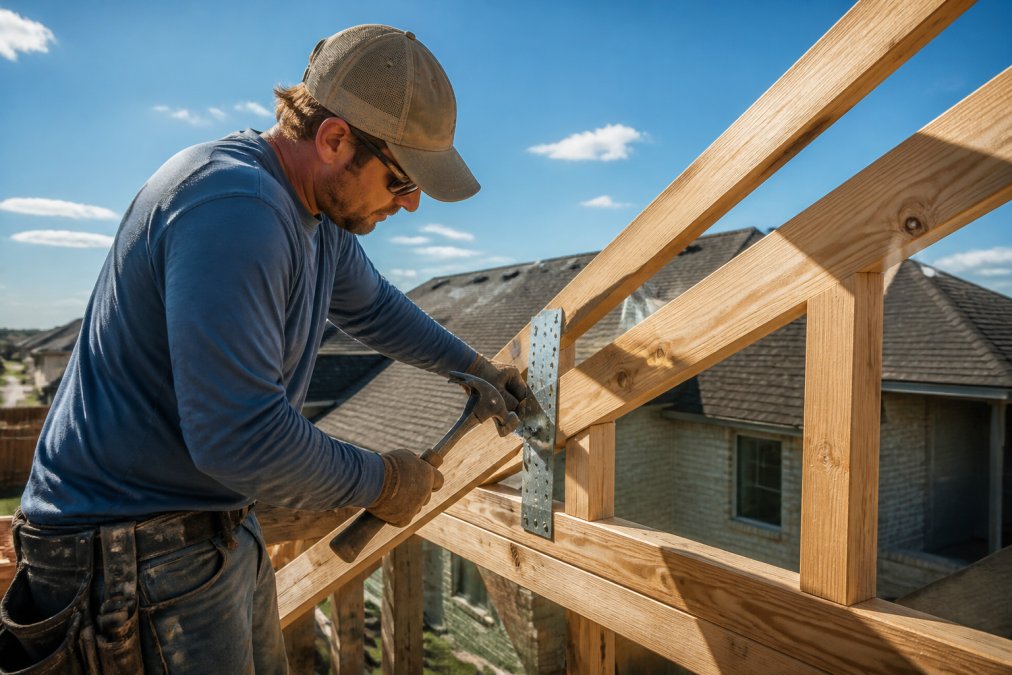
The catch: you usually have to ask. Carriers rarely apply mitigation credits automatically. Documentation matters too. Keep receipts, permits, and inspection reports, and submit them with your policy review. The Texas Department of Insurance windstorm mitigation resources outline which protective devices qualify and how to document them. If you’re not sure whether your roof qualifies, ask your agent to check the underwriting guidelines before you file the paperwork.
Step 5: Does Standard Homeowners Insurance Cover Flood Damage? Separate Policies Explained
Does standard homeowners insurance cover flood damage? No. A standard homeowners policy excludes flood, no matter how comprehensive the rest of the coverage is. Flood damage requires a separate policy, typically through the National Flood Insurance Program or a private flood carrier. This is the single biggest coverage gap we see in Texas, and it’s the one that hurts most, because a single storm can cause damage that costs more to repair than the home is worth.
Wind-driven rain that enters through a broken window is generally covered. Rising water from a creek, a swollen drainage ditch, or a storm surge is not. The distinction matters in Denton County and across North Texas, where flash flooding follows heavy spring storms.
Review your flood exposure every year, not just when you buy the home. FEMA flood maps are updated periodically, and a property that sat outside a high-risk zone a decade ago may not today.
Step 6: Improve Your Credit-Based Insurance Score and Claims History
Your credit-based insurance score and claims history drive more of your premium than most homeowners realize. Texas allows carriers to use credit information in underwriting and rating, and a weak score can push you into a higher tier even with a clean claims record. Paying down revolving balances, correcting errors on your credit report, and avoiding new credit inquiries in the months before your policy renewal can move you into a better tier.
Claims history works the same way, but the mechanism is less obvious. Carriers do not rely on your memory of what you filed. They pull a CLUE report (Comprehensive Loss Underwriting Exchange), a claims-history database maintained by LexisNexis that shows loss claims reported by insurers for roughly the past seven years. The report lists the date of loss, the type of loss, the amount paid, and the carrier that paid it. It follows the property as much as the person, which is why a prior owner’s hail claim can show up on your CLUE report after you buy the home.
How to pull and review your CLUE report:
- Request your free annual CLUE report directly from LexisNexis (you are entitled to one free report per year, and a free report after an adverse underwriting decision).
- Compare every entry against your own records: date, cause of loss, and amount paid.
- Flag anything that is not yours, is duplicated, or shows a $0 payout (a $0 claim still counts as a claim in many carriers’ rating models).
- Dispute errors in writing with LexisNexis and with the reporting carrier. Under the federal Fair Credit Reporting Act, the consumer reporting agency must investigate disputed information, generally within 30 days, and correct or delete what it cannot verify.
This is the step most Texas homeowners skip, and it is the one that can unlock real savings. A single erroneous claim entry can push you into a higher tier at renewal, and correcting it costs nothing but a letter and a follow-up call.
Order your CLUE report at least 60 days before your policy renews. Disputes take time to work through, and you want a clean report in front of the underwriter before the renewal quote is generated, not after.
On the credit side, the same discipline applies. Pull your credit reports, dispute inaccuracies, and pay down revolving balances well before renewal. A common pattern is a homeowner who improves their credit-based insurance score by a tier or two over six months and sees a meaningfully lower renewal quote without changing any coverage. The two levers, credit and claims, compound: a clean CLUE report plus a stronger insurance score is the combination that gets you the best rate a carrier is willing to offer.
Step 7: Review Your Policy Endorsements and Coverage Limits Annually
Policy endorsements are the add-ons that fill gaps in a standard policy, and they’re where coverage quietly drifts out of step with reality. Replacement cost on your dwelling, water backup coverage, scheduled personal property, and ordinance or law coverage all change as your home ages and your belongings accumulate. Underwriters reassess rebuilding cost every renewal, and if your dwelling limit lags behind actual construction costs, you’ll be underinsured at claim time.
Insurance Information Institute guidance on replacement cost versus market value explains why the two figures diverge and why rebuilding cost, not market value, sets your dwelling limit.
An annual policy review takes about fifteen minutes with your declarations page in hand. Ask three questions: has my dwelling limit kept pace with construction costs, do my endorsements still match my belongings, and has my deductible drifted out of line with my savings?
Texas homeowners insurance is a moving target. Hail seasons, rebuilding costs, and underwriting appetite all shift, and a policy that fit your home three years ago may leave you exposed today. Glenn Davis Insurance has served Texas homeowners since 1974 as a 100% independent agency, comparing multiple carriers on your behalf rather than pushing a single company’s product. Our team offers complimentary quotes and policy reviews, in-depth knowledge of the carriers writing in Texas, and proactive service at every renewal. Get started with Glenn Davis Insurance and find coverage that protects your home at the best price available.
Frequently Asked Questions
How much should home insurance be on a $400,000 house in Texas?
Premiums depend on location, construction type, roof age, claims history, and coverage limits. Coastal counties and hail-prone areas carry higher rates. Rather than anchoring to a single number, request quotes from multiple carriers and compare coverage limits, deductibles, and replacement cost estimates. An independent agent can show you options across carriers so you see the actual range for your specific property.
Why is Texas homeowners insurance so high?
Texas faces frequent hail, windstorms, and tornadoes, which drive up claims frequency and severity. The state also has a competitive but volatile market where carriers adjust rates after major weather events. Rebuilding costs, labor shortages, and reinsurance pricing all factor into premiums. Working with an independent agent who understands regional risk assessment can help you find carriers that price your specific property more favorably.
Does standard homeowners insurance cover flood damage?
No. Standard homeowners policies exclude flood damage. You need a separate flood insurance policy, typically through the National Flood Insurance Program or a private carrier. Texas homeowners in low-lying areas or near waterways should discuss flood coverage with their agent, especially since heavy rainfall and flash flooding are common. Ask your agent to review your dwelling coverage and liability coverage alongside flood options.
How do windstorm and hail deductibles affect my premium?
Windstorm and hail deductibles in Texas are often separate from your standard deductible and expressed as a percentage of your dwelling coverage, commonly 1% to 5%. A higher percentage deductible lowers your annual premium but increases your out-of-pocket cost if you file a wind or hail claim. Review these deductibles carefully with your agent and compare them against your risk tolerance and savings.