

Table of Contents
- Does Texas Home Insurance Cover Hail? The Short Answer
- How a Wind and Hail Deductible Changes What You Pay
- What Your Policy Actually Protects After a Hailstorm
- Actual Cash Value vs Replacement Cost: Why the Payout Differs
- Filing a Home Insurance Claim for Hail: Step by Step
- Will Filing a Hail Claim Raise Your Premium?
- Why Coastal and Inland Texas Policies Price Hail Risk Differently
- Frequently Asked Questions
Last Updated: September 13, 2026
Does Texas Home Insurance Cover Hail? The Short Answer
Yes, standard Texas home insurance policies cover hail damage, because hail is classified as a covered peril under most homeowners policies. This guide from Glenn Davis Insurance explains what that coverage actually pays, which parts of your home it protects, and where the gaps tend to appear.
The catch is rarely the coverage itself. It is the deductible. Many Texas policies apply a separate wind and hail deductible that works differently from your standard deductible, and that single line item changes your out-of-pocket math more than anything else in the policy. Below, we’ll walk through deductibles, payout types, the claims process, and the questions worth asking before the next storm hits.
According to the Insurance Information Institute, wind and hail consistently rank among the most common and most costly causes of homeowner insurance claims. Texas sits squarely in that path.
How a Wind and Hail Deductible Changes What You Pay
A wind and hail deductible is a separate, storm-specific deductible that applies only to windstorm and hail claims, and it usually costs you far more out of pocket than your standard deductible. Your policy may carry a flat deductible for fire or theft, then switch to a percentage-based figure the moment the damage comes from hail.
Here is how the two structures compare:
| Deductible Type | How It’s Calculated | Typical Policy Language | Who It Favors |
|---|---|---|---|
| Flat dollar | Fixed amount, e.g. $1,000 or $2,500 | Applies to most covered perils | Policyholder, on large claims |
| Percentage | Percentage of dwelling coverage limit | Applies to wind and hail only | Carrier, on high-value homes |
Percentage Deductibles vs. Flat Dollar Deductibles
Percentage deductibles are calculated against your dwelling coverage limit, not against the repair bill. That distinction is the single most misunderstood line in a homeowners policy, so it is worth running the numbers.
Say your home is insured for $400,000 and your wind and hail deductible is 2%. Your out-of-pocket floor is $8,000, even if the roofer quotes $9,500. The carrier pays the difference above the deductible, not a percentage of the repair. If the same policy carries a 5% wind and hail deductible, your floor jumps to $20,000 on the same home, which can exceed the entire cost of a partial roof replacement.
Most carriers write wind and hail deductibles somewhere in the 1% to 5% range, and the percentage is applied to the dwelling limit (Coverage A) rather than the total policy limit. A higher deductible lowers your premium, but on a hail-prone roof the trade-off can wipe out years of savings in a single storm. Run the math on your own Coverage A before you accept a higher percentage to shave the premium.
The most common mistake homeowners make is assuming their deductible is the dollar figure on the declarations page. On many policies, that number applies to fire and theft, while a separate percentage deductible governs hail. Read the wind and hail endorsement, sometimes labeled a windstorm or hail deductible endorsement, before you need it.
How the Deductible Interacts With Your Claim Payout
The deductible comes off the top of the covered loss, and it applies per occurrence, not per item. If hail damages your roof, gutters, and siding in one storm, you pay the deductible once and the carrier covers the rest of the covered damage above it.
That is why the deductible math matters most on borderline claims. If your wind and hail deductible is $8,000 and the adjuster scopes $9,000 in covered damage, you net $1,000, often less than the long-term premium impact of filing. If the same storm scopes $40,000, the deductible is a small fraction of the recovery and filing clearly makes sense.
A few practical points worth confirming with your agent:
- Whether the deductible is a flat dollar amount or a percentage of Coverage A.
- Whether the percentage is applied to the dwelling limit or the total insured value.
- Whether the deductible applies separately to wind and to hail, or as a combined wind-and-hail trigger.
- Whether a cosmetic damage exclusion or a separate roof settlement schedule changes the payout before the deductible is even applied.
Getting those four answers in writing before storm season is the difference between a predictable out-of-pocket number and a surprise at claim time.
What Your Policy Actually Protects After a Hailstorm
Hail coverage typically extends to the structure of your home and most attached fixtures, but it stops short of cosmetic and non-structural items. Knowing the boundary ahead of time prevents a surprise denial.

Roof, Siding, Gutters, and Screens
The dwelling coverage portion of your policy generally responds to hail damage on the roof, siding, gutters, downspouts, window screens, and attached structures such as a garage or deck. Damage to these items is usually assessed by an insurance adjuster who inspects for dents, granule loss, and cracked or fractured surfaces.
What Hail Coverage Typically Leaves Out
Exclusions vary by carrier and policy form, but common gaps include:
- Detached structures above the sub-limit (fences, sheds, freestanding garages)
- Cosmetic damage to surfaces that still function, where the policy contains a cosmetic exclusion
- Wear, tear, and deterioration that predates the storm
- Damage the adjuster attributes to poor maintenance rather than hail
Actual Cash Value vs Replacement Cost: Why the Payout Differs
Actual cash value and replacement cost are the two ways an insurer can value your loss, and the difference between them is often thousands of dollars on a roof claim. Actual cash value pays what your damaged property was worth just before the storm, factoring in age and depreciation. Replacement cost pays what it costs to repair or replace the item today, without deducting for depreciation.
A roof that is fifteen years old may have a modest actual cash value but a substantial replacement cost. If your policy settles hail claims on an actual cash value basis, your payout could fall well short of what a contractor quotes you. Many policies pay actual cash value up front and release the replacement cost portion once the work is completed and documented.
Ask your agent to confirm, in writing, whether your roof settles on replacement cost or actual cash value. It is the single question that most changes your out-of-pocket exposure after a hail claim, and the answer is buried in the policy form rather than the summary page.
Filing a Home Insurance Claim for Hail: Step by Step
Filing a home insurance claim for hail works best when you document the damage thoroughly before anyone touches the roof. Here is the sequence that keeps your claim clean:
- Photograph everything first. Capture wide shots of the property, then close-ups of dents in gutters, downspouts, vents, and siding.
- Note the date of loss. Identify the storm that caused the damage and write down when it occurred.
- Prevent further damage. Tarp a leaking roof or board a broken window. Most policies require reasonable mitigation.
- Contact your carrier or your independent agent. Report the claim and request an adjuster inspection.
- Keep every receipt. Save invoices for tarps, temporary repairs, and hotel stays if the home becomes uninhabitable.
- Meet the adjuster on site. Walk the property together and point out each area of damage you documented.
- Review the settlement estimate. Compare the adjuster’s scope against your contractor’s quote before accepting.
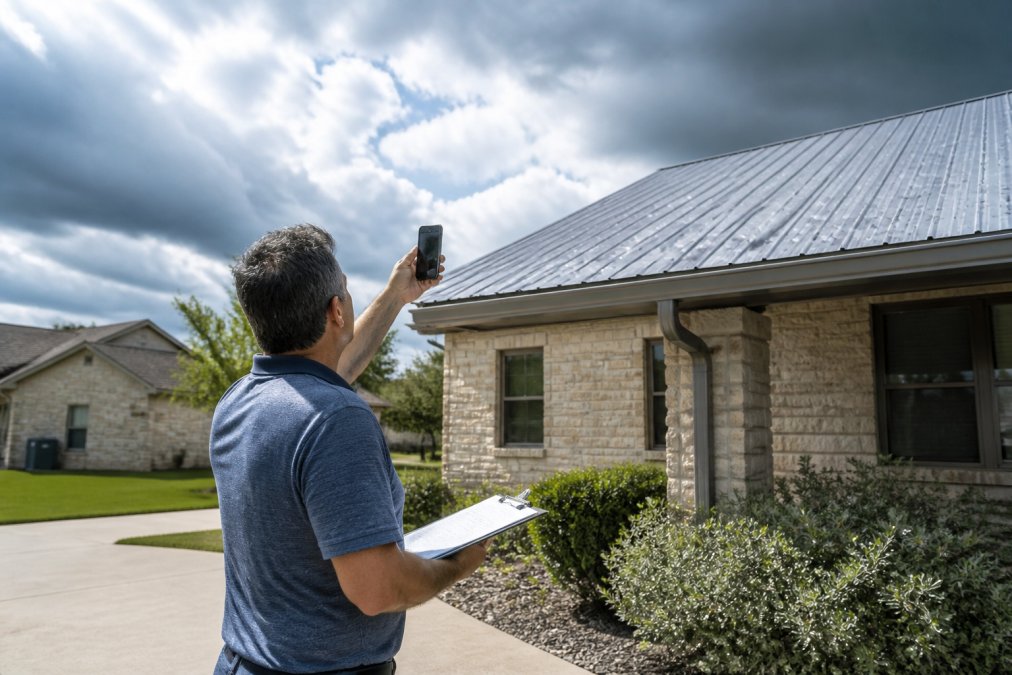
Documenting Hail Damage Before the Adjuster Arrives
Documentation is the difference between a smooth claim and a disputed one. Photograph from multiple angles, include something for scale, and record the date each photo was taken. Keep a written inventory of damaged items with approximate ages. If you hire a contractor for an inspection, get their findings in writing and retain it alongside your own photos.
The Texas Department of Insurance publishes consumer guidance on the claims process and what policyholders can expect from an adjuster, which is worth reading before you file.
Will Filing a Hail Claim Raise Your Premium?
Filing a hail claim can affect your premium, though the outcome depends on your carrier, your claims history, and whether the damage is widespread in your area. A single weather-related claim on a policy with no prior losses often has limited impact, particularly when the storm affected an entire region rather than your home alone.
Most competitors stop there. The more useful answer is to name the mechanisms that actually drive the outcome, because they determine whether a claim costs you money at renewal.
The Three Mechanisms That Drive the Outcome
1. Loss-history databases. Carriers report claims to industry loss-history databases, and those records follow the property as much as the policyholder. A hail claim filed today can show up when you shop for coverage in three years, and a new carrier will price the property with that history in view. That is the part most homeowners never see coming.
2. Weather-related surcharges vs. at-fault surcharges. A hail claim is a weather claim, not an at-fault claim, and most carriers treat the two differently. Weather claims are typically surcharged more lightly, or not at all, when the storm was widespread and the carrier can point to a regional event. The surcharge risk rises sharply when the claim looks isolated to your address or when it follows a pattern of prior claims.
3. Non-renewal and underwriting rules. Frequency, not severity, is what most often triggers non-renewal. Two or three claims in a short window, even small ones, can push a carrier to decline renewal at the next term. Once non-renewed, you may be forced into a surplus lines or higher-risk market where the premium is materially higher.
How to Decide Whether to File
The decision is a comparison, not a rule. Run three numbers side by side:
- The covered damage the adjuster scopes.
- Your wind and hail deductible.
- The likely premium impact over the next three to five years if you file.
If the net payout after the deductible is small relative to the potential premium impact, paying out of pocket often preserves a cleaner claims record. If the damage is substantial and clearly exceeds the deductible, filing is usually the right call, that is what the coverage is for.
A claim only makes financial sense when the covered damage clearly exceeds your deductible and the payout meaningfully outweighs the long-term premium impact. If the repair quote lands near your wind and hail deductible, paying directly often protects your claims history better than filing.
Questions to Ask Before You File
- Does my carrier surcharge weather-related claims, and at what claim count?
- How long does a hail claim stay on my loss history?
- Will filing this claim affect my eligibility for a replacement cost roof endorsement at renewal?
- If I am non-renewed, what markets are available to me and at what premium?
Getting those answers from your agent before you file turns a fear-based decision into a numbers-based one.
Why Coastal and Inland Texas Policies Price Hail Risk Differently
Coastal and inland properties carry different hail and wind risk profiles, and carriers price them accordingly. Coastal property faces combined windstorm and water exposure that often requires separate windstorm coverage or a specialized policy, while inland areas bear the brunt of hail frequency and severity.
That distinction matters when you shop. A policy written for a coastal exposure may exclude or separately rate windstorm coverage that an inland policy includes by default. If you own property in more than one part of the state, or you are comparing quotes across regions, expect the deductible structure, coverage limits, and available endorsements to differ.
This is where an independent agency earns its keep. Glenn Davis Insurance works with multiple carriers rather than a single company, which means we can compare how each one treats hail risk, deductibles, and roof settlement before you commit. If you are weighing a policy endorsement or trying to understand why two quotes for the same home look nothing alike, the National Association of Insurance Commissioners maintains consumer resources on homeowners coverage that can help you frame the right questions.
Hail coverage in Texas comes down to three things: whether hail is a covered peril, how your wind and hail deductible is structured, and whether your roof settles at replacement cost or actual cash value. Get those three right and the rest of the policy is far easier to read.
Glenn Davis Insurance has served Texas policyholders since 1974 as a fully independent agency, comparing coverage and pricing across multiple carriers instead of pushing a single company’s product. We offer complimentary quotes and policy reviews, and we will walk you through your deductible structure and exclusions line by line before you sign. Get started with Glenn Davis Insurance and find coverage built around your actual risk.
Frequently Asked Questions
Is hail damage covered by my insurance in Texas?
Yes, in most cases. Standard Texas home insurance policies treat hail as a covered peril, so damage to your roof, siding, gutters, and other structures is typically eligible for a claim. The catch is how you pay for it: hail claims are usually subject to a separate wind and hail deductible rather than your standard flat deductible, and that percentage-based amount can be several thousand dollars. Review your declarations page or ask your agent to confirm the exact terms before storm season.
What is a wind and hail deductible?
It is a separate deductible that applies only to windstorm and hail claims, and it is usually written as a percentage of your dwelling coverage rather than a flat dollar amount. If your home is insured for $400,000 and your wind and hail deductible is 2%, you pay the first $8,000 of a hail claim before the insurer pays the rest. Many Texas policies set this percentage between 1% and 5%, so the difference between two otherwise similar quotes can be significant.
Will my insurance rates go up if I file a hail claim?
They can. A hail claim is a weather-related loss rather than an at-fault loss, but insurers still track claim history when they set renewal pricing, and a single large claim may lead to a premium adjustment at renewal. That does not mean you should avoid every claim. If the damage is well above your deductible and affects the roof’s ability to shed water, filing usually makes financial sense. Compare the expected payout against the possible premium increase before you decide.
What is the difference between actual cash value and replacement cost coverage?
Actual cash value pays what your damaged property was worth just before the storm, which means depreciation is subtracted from the payout. Replacement cost pays what it costs to repair or replace the item with a similar new one, up to your coverage limits. On an older roof, that gap can be thousands of dollars out of pocket. Check your policy’s loss settlement section, and ask your agent whether a replacement cost endorsement is available for your roof.